Why Uncertainty Feels Heavy (And How to Float Through It)
Evelyn Reed ·
Listen to this article~4 min
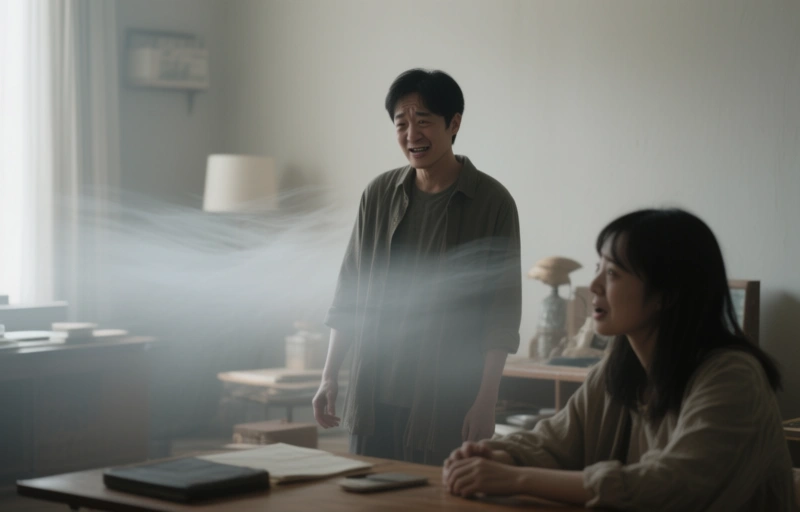
Uncertainty doesn't have to trigger anxiety. Discover a simple mindfulness practice for embracing change, floating through the unknown, and appreciating the ride.
Let’s be honest: uncertainty has a bad reputation. The moment the ground shifts under our feet—whether it’s a job change, a relationship shift, or just the general chaos of life—our minds go into overdrive. We start rehearsing worst-case scenarios, replaying past mistakes, and trying to control outcomes that were never ours to control in the first place.
But here’s the thing: uncertainty doesn’t have to be the enemy. In fact, when we stop fighting it, it can become a doorway to something deeper. This mindfulness practice isn’t about pretending everything is fine. It’s about learning to rest in the flow of experience—even when that flow feels more like rapids than a calm river.
### Why We Resist the Unknown
Our brains are wired for safety. They crave predictability because predictability feels like control. When we don’t know what’s coming next, the amygdala—our built-in alarm system—lights up like a pinball machine. That’s why uncertainty often triggers anxiety, even when there’s no actual threat in sight.
But here’s what’s easy to forget: the discomfort you feel isn’t a sign that something is wrong. It’s a sign that you’re human. The resistance itself—the pushing away, the clinging, the white-knuckling—that’s what creates the suffering. Not the uncertainty. The fight against it.
### The Practice: Floating, Not Fighting
Think of it this way. When you’re in the ocean and a wave comes, you have two options. You can tense up, try to stand your ground, and get knocked over. Or you can dive into the wave, let it pass over you, and come up on the other side. Mindfulness is the second option.
Here’s a simple practice to try the next time uncertainty shows up:
- **Pause and name it.** Say to yourself, “This is uncertainty.” Naming the feeling takes away some of its power.
- **Take three slow breaths.** In through the nose, out through the mouth. Let your shoulders drop.
- **Ask yourself: “What can I control right now?”** Usually, it’s just your next breath, your next step, your next word.
- **Let the rest go.** Not forever—just for this moment. You can pick it back up later if you want.
This isn’t about bypassing your feelings or pretending you don’t care. It’s about giving yourself permission to be where you already are.
### What It Means to Rest in the Flow
Resting in the flow of experience doesn’t mean you become passive. On the contrary, it’s an active choice to stay present. You’re not trying to fix the moment or escape it. You’re simply acknowledging, “This is what’s happening right now, and I can handle it.”
That shift in perspective is everything. When you stop fighting the current, you start noticing things you missed before—the small joys, the unexpected connections, the quiet strength you didn’t know you had. The ride becomes less about reaching a destination and more about how you show up along the way.
### A Gentle Reminder
As the saying goes, “Life is what happens while you’re busy making other plans.” The same is true for uncertainty. It’s not a problem to solve. It’s a condition to embrace.
So the next time you feel that familiar tightness in your chest, remember: you don’t have to have all the answers. You don’t need to know how it ends. You just need to be here, in this moment, with yourself. That’s enough. That’s always been enough.
Take a breath. Feel your feet on the ground. And let the flow carry you—not because you’re giving up, but because you’re finally choosing to ride the wave instead of being crushed by it.