Why Tiny Actions Beat Big Health Goals Every Time
Amanda Wilson ·
Listen to this article~4 min
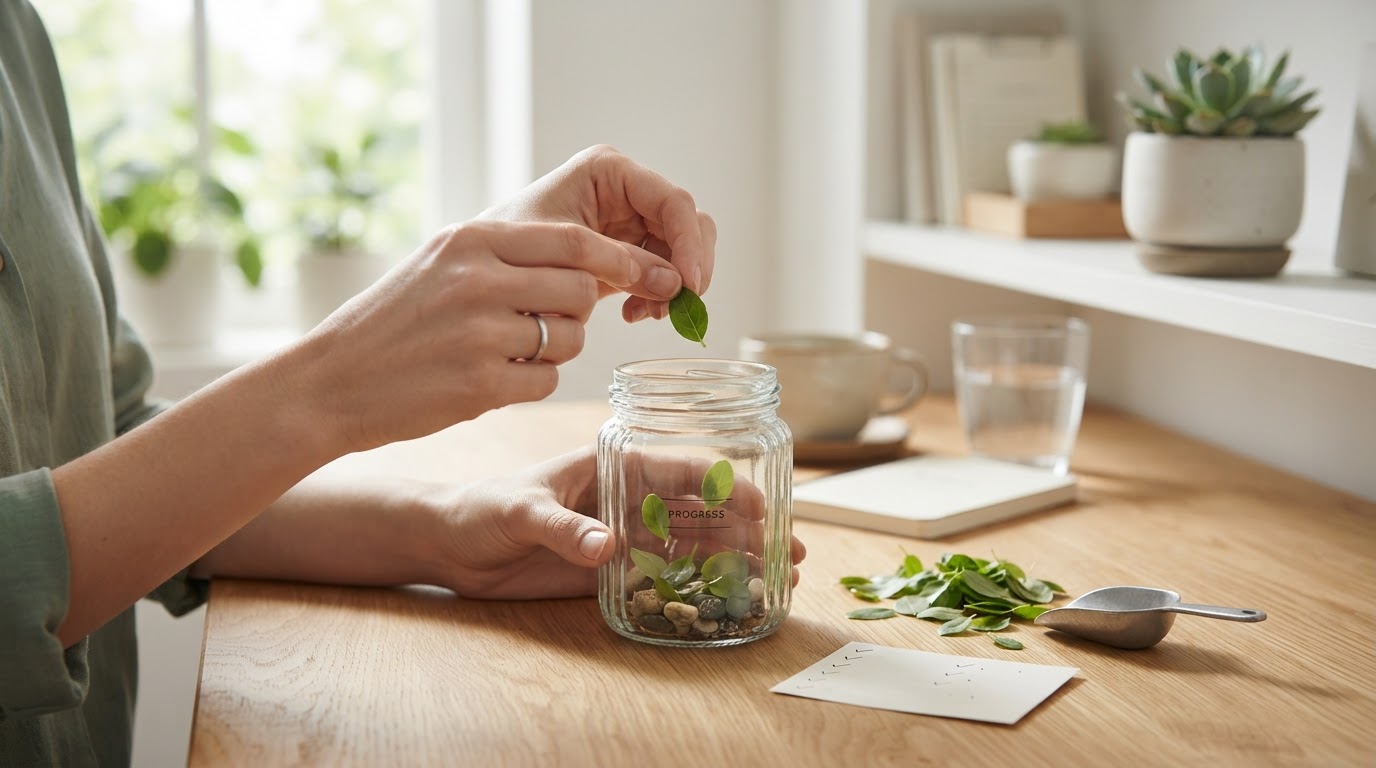
Struggling to make a health habit stick? The secret isn't willpower—it's doing something that is not nothing. Small, 2-minute actions build momentum and lasting change.
You know that feeling. You've set the alarm for 5:30 AM to meditate, packed your gym bag the night before, and stocked the fridge with kale. Then Monday arrives, and somehow you hit snooze, grab a bagel, and tell yourself you'll start fresh next week.
Sound familiar? If you've been struggling to make a new health habit stick, the solution might be easier—and shorter—than you think. It's not about willpower or grand gestures. It's about doing something that is not nothing.
### The Problem with All-or-Nothing Thinking
Most of us approach healthy living like we're training for the Olympics. We demand perfection from day one. A 30-minute meditation session. A 5-mile run. A complete diet overhaul. And when we fall short—which we inevitably do—we throw our hands up and quit entirely.
That's the trap. We've built this mental model where anything less than the ideal doesn't count. But here's the truth: a 2-minute breathing exercise counts. A 10-minute walk around the block counts. Swapping one soda for water counts. These tiny actions might feel insignificant, but they're the building blocks of lasting change.
### The "Not Nothing" Principle
Here's a simple reframe: instead of asking yourself to do something big, ask yourself to do anything at all. The goal isn't to nail a perfect routine. The goal is to avoid doing nothing.
Think of it this way. When you're feeling unmotivated, the gap between "do nothing" and "do something" feels enormous. But the gap between "do nothing" and "do one tiny thing" is almost zero. And once you start moving, momentum takes over.
This isn't just feel-good advice—it's backed by behavioral science. Psychologists call it the "minimum viable action" approach. When you lower the barrier to entry, you're far more likely to show up consistently. And consistency, not intensity, is what actually builds habits.
### How to Start (Without Overwhelming Yourself)
Ready to put this into practice? Here are a few strategies to get you moving today:
- **Pick a micro-habit**: Choose one action that takes less than 2 minutes. Floss one tooth. Do one push-up. Write one sentence in a journal. That's it.
- **Anchor it to something you already do**: Pair your new habit with an existing routine. Do five deep breaths right after you pour your morning coffee. Stretch for 60 seconds while the microwave runs.
- **Focus on the start, not the finish**: Your only job is to begin. Once you've started, you're free to stop. But you'll likely find that beginning is the hardest part, and continuing feels natural.
- **Track your wins**: Put a checkmark on your calendar for every day you do your micro-habit. Watching the chain grow is surprisingly motivating.
### The Ripple Effect of Small Wins
Here's the beautiful part: those tiny actions don't stay tiny. A 2-minute meditation often turns into 10. A single push-up becomes a full set. A short walk clears your head and gives you energy for the rest of your day.
You're not just building a habit—you're building a new identity. Every small action whispers, "I'm the kind of person who shows up for myself." And that belief compounds over time.
So the next time you feel stuck, don't aim for perfect. Aim for anything. Do something that is not nothing. Your future self will thank you.