Rethinking Shame and Guilt: A Path to Peace
Amanda Wilson ·
Listen to this article~5 min
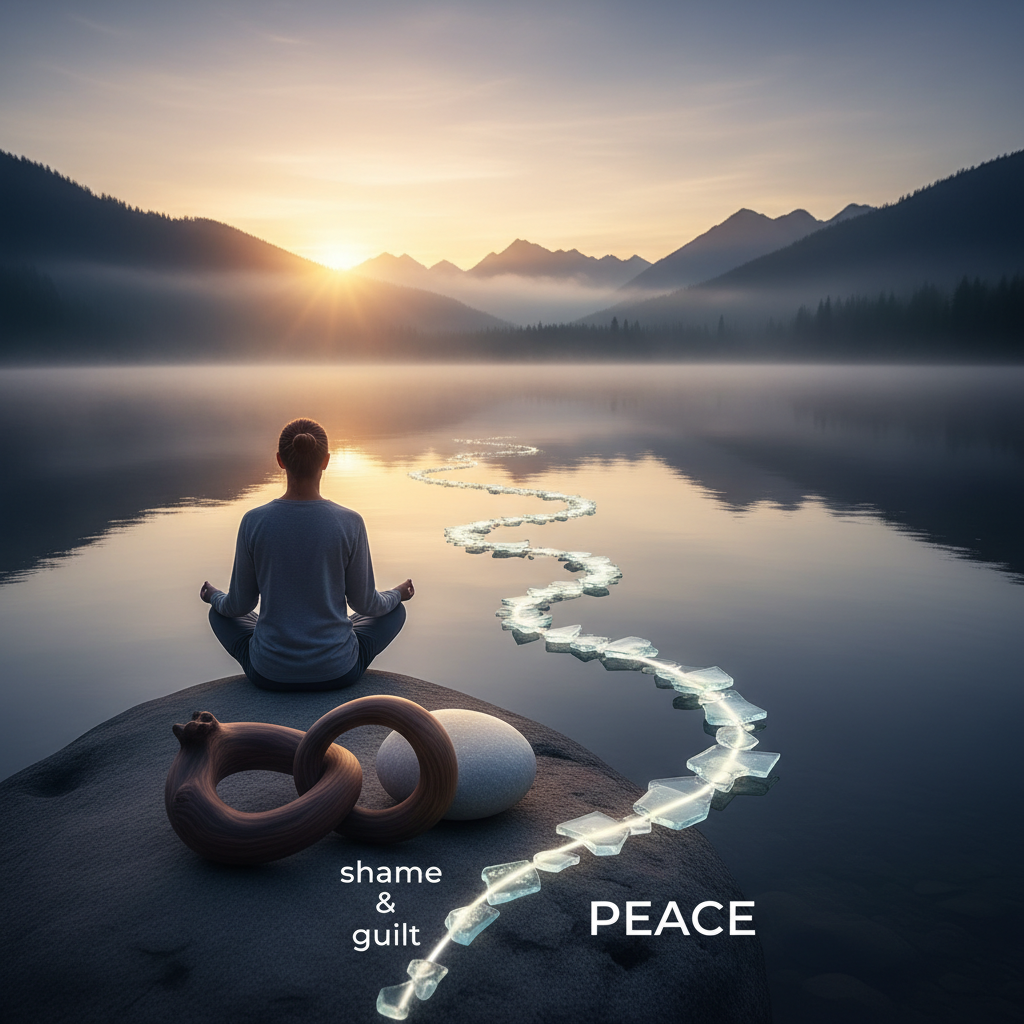
Guilt and shame are painful but persistent emotions. Instead of trying to eliminate them, we can learn to live peacefully with them through mindfulness and self-compassion.
Guilt and shame are two of the most painful emotions we carry. They weigh on us like a stone in the chest, making us want to hide or run. But here's the thing: they're not going anywhere. No matter how much we try to push them away, they keep showing up. So maybe the real question isn't how to get rid of them, but how to live with them differently.
Mindful founding editor Barry Boyce explores this very idea. He suggests that these troublesome companions might actually have something to teach us if we're willing to listen. The key isn't to eliminate guilt and shame, but to change our relationship with them.
### Understanding the Difference
First, let's get clear on what we're dealing with. Guilt is often tied to a specific action. You feel guilty because you did something wrong, like snapping at a friend or missing a deadline. Shame, on the other hand, is more global. It's not about what you did, but who you are. Shame whispers, "You are bad," while guilt says, "You did something bad."
This distinction matters. Guilt can be a helpful signal. It points to a behavior you might want to change. Shame, though, can be corrosive. It eats away at your sense of self-worth. But both emotions, when handled with care, can lead to growth.
### Why We Can't Just Ignore Them
You might wish you could snap your fingers and make guilt and shame disappear. But emotions don't work that way. They're part of being human. Trying to suppress them often backfires, making them louder and more persistent. Instead, we can learn to sit with them, to acknowledge their presence without letting them take over.
Think of it like this: guilt and shame are like weather patterns. They come and go. You wouldn't try to stop a rainstorm by yelling at the clouds. You'd grab an umbrella and wait it out. The same approach can work here.
### Practical Steps for a New Relationship
So how do you actually change your relationship with guilt and shame? Here are a few ideas:
- **Pause and name it.** When you feel that familiar knot in your stomach, stop for a moment. Say to yourself, "This is guilt" or "This is shame." Naming the emotion takes away some of its power.
- **Get curious, not critical.** Instead of judging yourself for feeling this way, ask questions. "What is this emotion trying to tell me?" "Is there a lesson here?" Curiosity opens the door to understanding.
- **Practice self-compassion.** This is huge. Remind yourself that everyone makes mistakes. You're not alone in this. A simple phrase like "May I be kind to myself" can shift your perspective.
- **Take action if needed.** If guilt points to something you can fix, do it. Apologize. Make amends. Action can release the grip of guilt. But if it's shame, focus on accepting yourself as you are, flaws and all.
### The Role of Mindfulness
Mindfulness is a powerful tool here. It helps you observe your emotions without getting swept away. When you're mindful, you can notice guilt or shame arising and choose how to respond instead of reacting automatically.
Barry Boyce's work reminds us that these emotions aren't inherently bad. They become problematic when we let them define us. With practice, we can hold them lightly, like a friend passing through town. They visit, but they don't have to move in.
> "Guilt and shame are not our enemies. They are messengers. The question is whether we're willing to listen."
### Moving Forward with Grace
Living peacefully with guilt and shame doesn't mean you'll never feel them again. It means you'll know what to do when they show up. You'll have tools to navigate the discomfort. And over time, you might even find gratitude for what they teach you.
Remember, you're not alone in this journey. Every person you meet carries their own weight of guilt and shame. We're all learning, growing, and figuring it out as we go. So take a deep breath. Be gentle with yourself. And know that peace is possible, one mindful moment at a time.