Mindfulness for Emotional Sobriety in Recovery
Amanda Wilson ·
Listen to this article~5 min
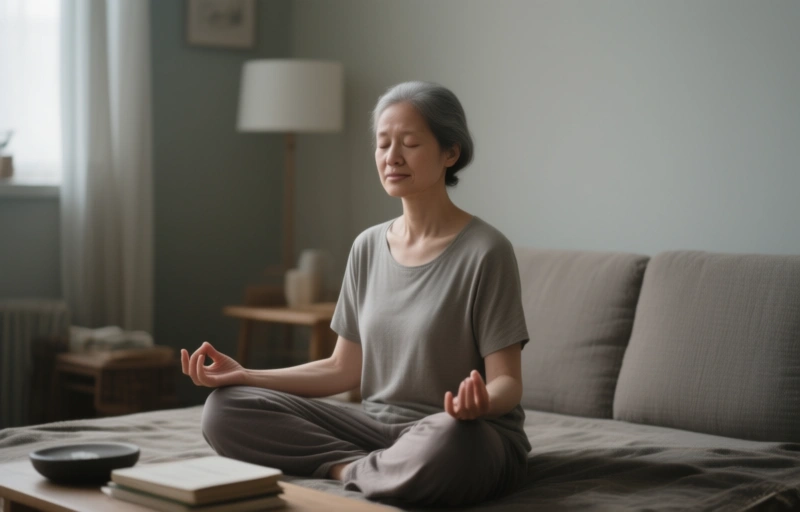
Emotional sobriety means managing feelings without addictive behaviors. Learn how mindfulness can help you pause, reduce reactivity, and build long-term healing in recovery.
When people hear the term "sobriety," they often assume it is just about stopping an addictive behavior. But as recovery coach Stephanie Hazard observes, sobriety is a practice that extends to every area of our lives, including our emotions, and it can hold the key to long-term healing.
We usually think of addiction as something tied to substances like alcohol or drugs. But the truth is, addiction can show up in many ways. It might be work, gambling, social media, or even a relationship. The common thread is that we use something external to numb, distract, or comfort ourselves. That is where emotional sobriety comes in.
### What Is Emotional Sobriety?
Emotional sobriety is the ability to manage your feelings without turning to addictive behaviors. It means sitting with discomfort, processing anger, and allowing sadness to pass through you instead of running from it. Think of it like building a muscle. At first, it feels awkward and hard. But with practice, it gets stronger.
Recovery coach Stephanie Hazard explains that emotional sobriety is about being honest with yourself. You do not have to pretend everything is fine when it is not. You just need to stay present with what is actually happening inside you.
### How Mindfulness Helps
Mindfulness is the practice of paying attention to the present moment without judgment. It sounds simple, but it can be a game-changer in recovery. When you are mindful, you notice your thoughts and feelings without immediately reacting to them.
Here is how mindfulness supports emotional sobriety:
- **It creates a pause.** Before you reach for that drink, phone, or distraction, mindfulness gives you a moment to breathe and choose a different response.
- **It lowers reactivity.** You learn to observe your emotions like clouds passing by, not commands you have to obey.
- **It builds self-awareness.** Over time, you start to recognize your triggers. Maybe it is stress from work or a fight with a loved one. Once you see the pattern, you can break it.
- **It reduces shame.** Addiction often comes with heavy guilt. Mindfulness helps you accept yourself as you are, which makes it easier to keep moving forward.
### Practical Mindfulness Techniques for Recovery
You do not need to sit on a cushion for hours to practice mindfulness. Small moments add up. Try these simple techniques:
**1. The 5-4-3-2-1 Grounding Exercise**
When a craving hits, stop and notice:
- 5 things you can see
- 4 things you can touch
- 3 things you can hear
- 2 things you can smell
- 1 thing you can taste
This pulls you out of your head and into the present moment. It interrupts the automatic urge to escape.
**2. Mindful Breathing for 60 Seconds**
Set a timer for one minute. Breathe in for four counts, hold for four, and exhale for four. Focus only on the air moving in and out. When your mind wanders, gently bring it back. That is the whole practice.
**3. Body Scan Check-In**
Close your eyes and mentally scan from your toes to the top of your head. Notice any tightness or discomfort. Breathe into those areas. This helps you connect with physical sensations instead of numbing them.
### Why Emotional Sobriety Matters for Long-Term Healing
Stopping a behavior is just the first step. If you do not address the emotional patterns underneath, you are likely to swap one addiction for another. Emotional sobriety is what fills the void left by the old habit. It gives you a new way to relate to yourself and the world.
Recovery is not about perfection. It is about progress. Some days you will feel calm and centered. Other days, you might feel raw and overwhelmed. That is okay. The goal is not to avoid hard feelings but to learn how to ride them without crashing.
### A Gentle Reminder
If you are in recovery, give yourself credit for every small step. Mindfulness is a skill, and it takes time to develop. Be patient with yourself. You are rewiring your brain and your heart. That is no small thing.
Stephanie Hazard reminds us that sobriety is not just about what you stop doing. It is about what you start doing for yourself. Emotional sobriety opens the door to real freedom, the kind that lasts.