This Meditation Can Help You Navigate Life's Hardest Moments
Evelyn Reed ·
Listen to this article~5 min
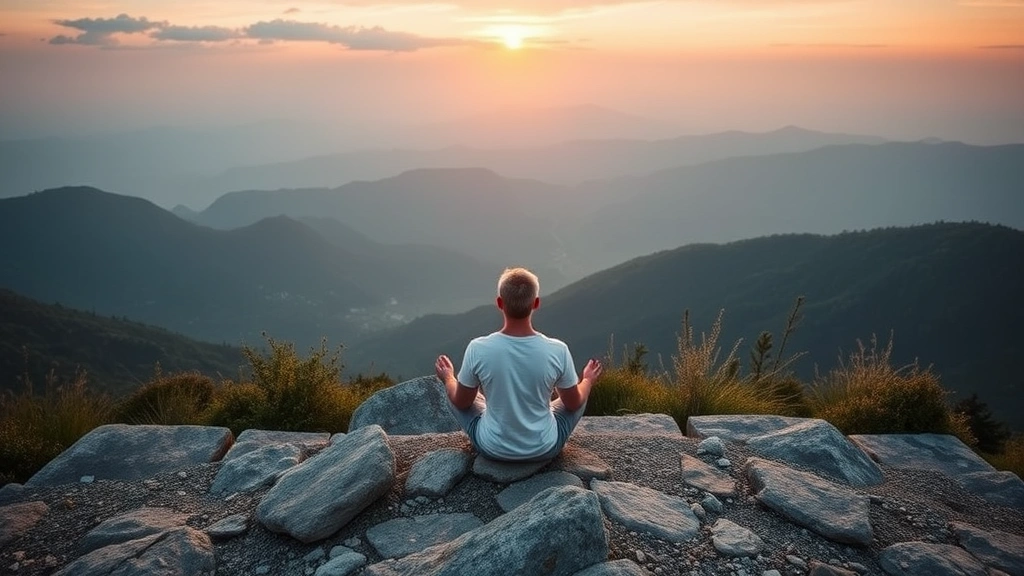
Rich Fernandez leads an extended mindfulness practice to help you shift perspective, step back from overwhelming emotions, and build the inner strength to face life's hardest moments with wisdom and clarity.
Life has a way of throwing curveballs when we least expect them. A sudden job loss, a health scare, a relationship falling apart—these moments can leave us feeling stuck, overwhelmed, and completely lost. But here's the thing: you don't have to be at the mercy of your circumstances. You can build the inner capacity to navigate difficulty with more grace and clarity.
In this extended mindfulness practice, Rich Fernandez walks us through a process to hone our ability to shift, to take perspective, and in some ways, to subtract ourselves from our experiences. That last part might sound strange, but it's actually a game-changer. When we can step back from our own swirling thoughts and emotions, we create space for wiser responses instead of knee-jerk reactions.
### Why We Struggle With Difficulty
Let's be honest: when things get hard, our default mode is usually to resist, avoid, or spiral into worry. That's completely normal. Our brains are wired to detect threats and protect us, even when the "threat" is just an uncomfortable emotion or a challenging conversation. The problem is that this automatic response often makes things worse, not better.
Think about the last time you faced a tough situation. Did you lie awake at 2 a.m. replaying every detail? Did you snap at someone you love because you were carrying so much tension? If so, you're in good company. But here's the good news: you can train your mind to respond differently.
### The Power of Shifting Perspective
One of the core skills in this meditation is learning to shift. Not in the sense of avoiding your problems, but in the sense of changing your relationship to them. Imagine you're standing in a dark room with a single flashlight. Right now, you might be pointing that light directly at every obstacle, making it look enormous and insurmountable. But what if you could widen the beam? What if you could see the whole room, including the doors and windows you didn't notice before?
That's what perspective-taking does. It helps you see the bigger picture, recognize that this moment of difficulty is just one part of your story, and connect with the resources you already have—like your resilience, your past successes, and the people who care about you.
### Subtracting Yourself From the Experience
Here's where things get really interesting. The practice invites us to subtract ourselves from our experiences. Now, that doesn't mean becoming cold or detached. It means loosening the grip of the "me" narrative that says, "This is happening to me, and it's terrible, and I can't handle it."
When you can observe your thoughts and feelings without getting tangled up in them, you realize that you are not your thoughts. You are not your anxiety. You are not your anger. You're the awareness that notices these things arising and passing. And from that place of awareness, you can make wiser choices.
### How to Practice This Meditation
Ready to give it a try? Here are a few tips to get the most out of this practice:
- **Set aside 15-20 minutes** in a quiet space where you won't be interrupted. Turn off your phone notifications and let the people around you know you need some time.
- **Start with a few deep breaths** to settle into your body. Feel your feet on the floor and the weight of your body in your chair.
- **Follow Rich's guidance** as he leads you through the process. You don't need to do anything perfectly—just stay curious and open.
- **Notice when your mind wanders** (it will!) and gently bring it back. This isn't about clearing your mind; it's about practicing returning.
- **End with a moment of gratitude** for the time you just gave yourself. Even one minute of mindful presence counts.
### Bringing It Into Daily Life
The real magic happens when you take this practice off the cushion and into your everyday life. The next time you feel triggered or overwhelmed, pause for just one breath. Ask yourself: "Can I shift my perspective here? Can I step back and see the bigger picture? Can I make space for a wiser response?"
This doesn't mean suppressing your feelings or pretending everything is fine. It means acknowledging what's true, and then choosing how you want to respond rather than being swept away by automatic reactions.
Mindfulness isn't about having a perfect life or being calm all the time. It's about building the capacity to be with what is, even when it's hard. And that capacity grows with practice, one breath at a time.
So, the next time life gets tough, remember: you have more inner resources than you think. This meditation is one tool to help you access them. Give yourself the gift of practice, and watch how your relationship to difficulty begins to transform.