Awakening vs Liberation: A Mindful Path
Emily Johnson ·
Listen to this article~4 min
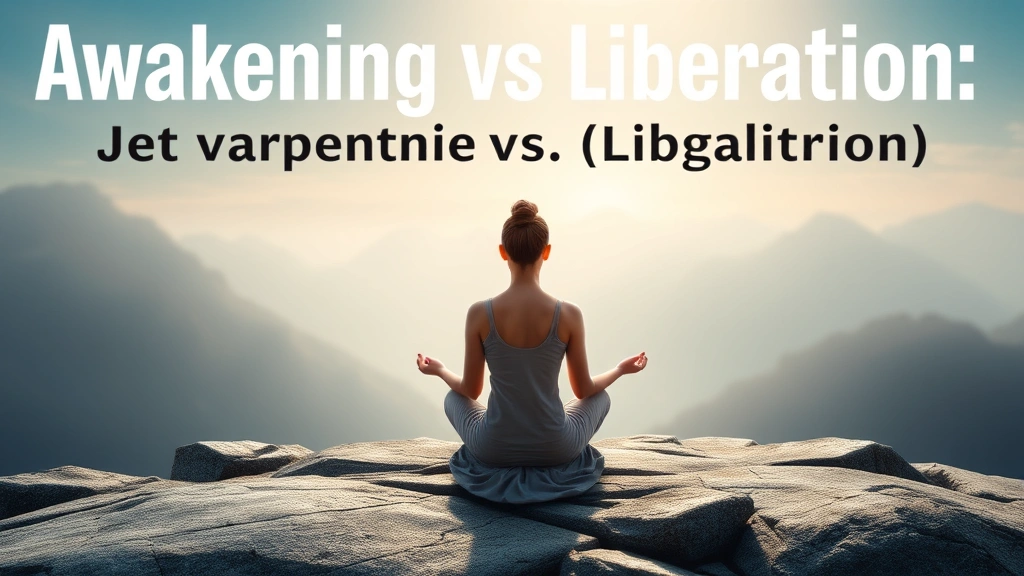
Host Michael Taft and guest Joe Hudson explore why meditation insights don't automatically free us from shame or emotional reactivity. Joe reframes emotional practice as a path of awakening, inviting us to love difficult feelings, not just accept them.
### The Core Difference Between Awakening and Liberation
Have you ever sat in meditation, felt a moment of profound clarity, and then walked away only to snap at a loved one or spiral into self-criticism? You’re not alone. Host Michael Taft and guest Joe Hudson dive into this exact struggle in their conversation, exploring why deep insight on the cushion doesn’t automatically translate to freedom in real life.
Joe Hudson reframes emotional practice not as a side project to awakening, but as the path itself. He argues that we don’t just need to accept difficult emotions—we need to love them. That’s a big shift. Instead of tolerating anger or shame, we’re invited to get curious about how they show up in our relationships, our self-talk, and our reactive habits.
### Why Insight Alone Isn’t Enough
It’s easy to think that if we just meditate enough, we’ll be free. But Joe points out that awakening—seeing through the illusion of a separate self—doesn’t automatically heal our conditioned patterns. You can have a glimpse of non-duality and still feel triggered by a partner’s tone or a colleague’s criticism.
- Awakening is about recognizing the nature of mind.
- Liberation is about embodying that recognition in daily life.
- Emotional work bridges the gap between the two.
Joe’s approach is refreshingly practical. He doesn’t ask you to bypass your feelings or pretend everything’s fine. Instead, he suggests that feeling emotions fully—without resistance or story—is how we actually integrate insight.
### How to Practice Loving Your Emotions
So what does it look like to love a difficult emotion? Joe suggests starting small. Next time you feel a wave of shame or anxiety, pause. Don’t try to fix it or push it away. Just notice where it lives in your body—maybe a tight chest or a knot in your stomach. Then, instead of labeling it as bad, see if you can hold it with warmth.
> “We’re not trying to get rid of emotions. We’re learning to be with them in a way that transforms their hold on us.”
This isn’t about forcing positivity. It’s about recognizing that every emotion has a kind of intelligence. Anger can show us boundaries. Grief can open our hearts. When we stop fighting them, we start to actually live more freely.
### Practical Steps for Mindful Living Professionals
If you’re a mindful living professional in the US, here’s how you can apply Joe’s insights with clients or in your own practice:
- **Start with self-compassion.** Before guiding others, check in with your own emotional landscape. What feelings are you avoiding today?
- **Use body-based practices.** Instead of just talking about emotions, invite clients to notice physical sensations. This grounds the work in the present moment.
- **Reframe resistance.** When a client says they hate their anxiety, explore what it would be like to be curious about it instead.
- **Keep it simple.** You don’t need a 10-step protocol. Sometimes just sitting with a feeling for 60 seconds is enough.
Joe’s conversation with Michael is a reminder that the spiritual path isn’t about escaping our humanity. It’s about diving deeper into it—relationship by relationship, feeling by feeling. That’s where real liberation happens.