Awakening vs Liberation: A Path to Emotional Freedom
Emily Johnson ·
Listen to this article~4 min
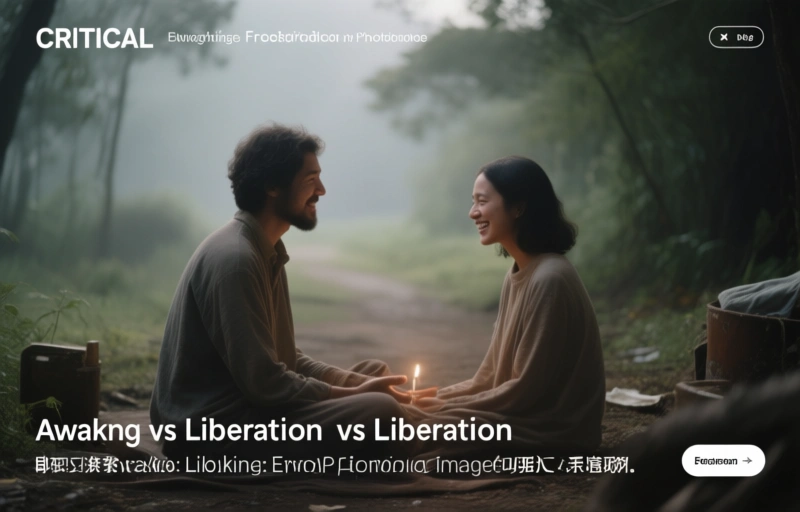
Host Michael Taft and guest Joe Hudson explore the crucial difference between awakening and liberation, showing why insight on the cushion doesn't automatically free us in relationship, shame, or emotional reactivity. Joe reframes emotional practice as a path of awakening, inviting us to love diffic
In a recent conversation between host Michael Taft and guest Joe Hudson, the two explored a subtle but crucial distinction: awakening versus liberation. It's one thing to have a profound insight while sitting on a cushion in meditation—but it's another thing entirely to live that freedom in the messy, real-world moments of relationship, shame, self-talk, and emotional reactivity. Joe Hudson reframes emotional practice not as a side project to awakening, but as the very path itself. He invites us not merely to accept difficult emotions, but to love them, to feel them fully, and to let them guide us home.
### The Cushion Doesn't Fix Everything
Let's be honest: you can have the most profound realization of non-duality during a silent retreat, and then five minutes later snap at your partner because they left the dishes in the sink. That's not a failure—it's a clue. Awakening gives you a glimpse of the big picture, but liberation is about integrating that insight into every inch of your life. Joe Hudson points out that our emotional habits, especially around shame and self-talk, are like deep grooves in the mind. Insight alone doesn't erase them. You have to do the work of feeling, not just knowing.

### Loving Your Emotions—Even the Hard Ones
Here's where Joe's approach gets really interesting. Most of us try to manage our emotions: we push away anger, suppress sadness, or cling to joy. But Joe suggests something radical: instead of managing, try loving. Not in a saccharine, forced way, but with genuine curiosity and warmth. When you feel shame rising, instead of running from it, you can turn toward it and say, "Oh, there you are. I see you." This isn't about wallowing—it's about creating a safe container inside yourself where all emotions are welcome. And guess what? When you love a difficult emotion, it often softens and releases.
### What This Looks Like in Practice
So how do you actually do this? Here are a few simple steps that Joe and Michael discuss:
- **Pause and notice.** When a strong emotion hits, stop for a second. Don't react immediately. Just notice the physical sensation—tightness in your chest, heat in your face, a knot in your stomach.
- **Get curious.** Ask yourself: "What is this feeling trying to tell me?" Not in a analytical way, but with genuine interest.
- **Breathe into it.** Instead of pushing the feeling away, imagine your breath flowing right into the center of it. Stay with it for 30 seconds.
- **Say "I love this feeling."** It might feel weird at first, but try it. Say it softly to yourself. Notice what shifts.
### Why This Matters for Professionals
If you're a mindful living professional in the United States, this conversation is gold. Your clients don't need more techniques to control their emotions—they need permission to feel them fully. They need a path that honors both the spaciousness of awakening and the grit of liberation. Joe Hudson's work is a beautiful reminder that the spiritual path isn't about escaping your humanity; it's about diving deeper into it.
### The Takeaway
The real work isn't on the cushion—it's in the car, at the dinner table, and in the quiet moments when you talk to yourself. Awakening shows you the door, but liberation is walking through it, again and again, with love as your guide.