12-Minute Meditation to Make Movement Mindful
Emily Johnson ·
Listen to this article~5 min
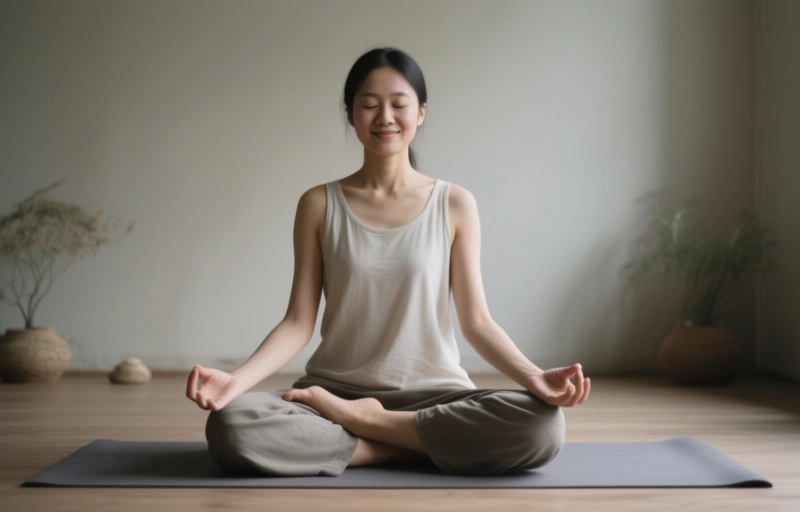
In this 12-minute meditation, Cara Bradley guides you to connect body and mind through mindful movement. Learn how embodied open awareness can reduce stress and improve focus, no matter where you are.
### Find Stillness in Motion
Ever feel like your body is moving through the day while your mind is miles ahead? You’re not alone. Most of us struggle to stay present when life pulls us in a dozen directions. But what if movement itself could become your anchor?
In this 12-minute guided meditation, teacher Cara Bradley shows you how to bridge the gap between your body and mind. She helps you tap into what she calls “embodied open awareness”—a state where you’re fully tuned in to each step, stretch, or breath. No need to sit still for this one. You can do it while walking, stretching, or even doing dishes.
The beauty of mindful movement is that it doesn’t require a yoga mat or a quiet room. It’s about bringing your attention to the here and now, no matter what your body is doing. Let’s break it down.
### Why Mindful Movement Matters
Your brain processes about 11 million bits of information every second. But most of that happens below your conscious awareness. When you move without thinking, you’re missing out on a powerful opportunity to ground yourself.
Mindful movement helps you:
- Reduce stress by focusing on physical sensations instead of racing thoughts
- Improve coordination and balance by syncing your mind with your body
- Boost emotional regulation by creating a calm, centered space inside yourself
Cara Bradley’s approach is simple: she guides you to notice the weight of your feet on the ground, the air moving across your skin, and the subtle shifts in your muscles. It’s not about doing it perfectly. It’s about paying attention.
### How to Practice This 12-Minute Meditation
You don’t need any special gear. Just a few feet of space and a willingness to slow down. Here’s how to get started:
- **Find a comfortable spot** where you can stand or walk without distractions. A hallway or a quiet corner works great.
- **Set a timer for 12 minutes** or use the guided audio if you have it.
- **Start with your feet.** Feel the ground beneath you. Notice the pressure on your heels and toes.
- **Move slowly.** Whether you’re walking or swaying, keep the pace gentle. Let your breath guide the rhythm.
- **Scan your body.** Bring awareness to your legs, hips, spine, shoulders, and head. Don’t judge what you find. Just observe.
Cara encourages you to treat each movement like a tiny meditation. When your mind wanders—and it will—gently bring it back to the sensation of moving. That’s the practice.
### The Power of Embodied Open Awareness
Embodied open awareness is a fancy way of saying: you’re fully alive in this moment. It’s the opposite of zoning out or multitasking. When you practice it, you start to notice things you usually miss—the way your breath feels in your chest, the warmth of sunlight on your arm, the quiet hum of your own heartbeat.
This isn’t about escaping life. It’s about meeting it more fully. Over time, mindful movement can help you respond to challenges with more clarity and less reactivity. You become less like a leaf blown by the wind and more like a tree with deep roots.
> “Movement is not just about getting from point A to point B. It’s a chance to wake up to the miracle of being alive.” — Inspired by Cara Bradley’s teachings
### Make It Your Own
The best part of this meditation is that it’s flexible. You can do it in the morning to start your day with intention, or in the evening to unwind. You can do it for 5 minutes or 20. The key is consistency, not duration.
Try pairing it with a daily activity you already do—like walking to your car or brushing your teeth. That way, it becomes a habit without adding extra time to your schedule.
Remember: mindful movement isn’t about achieving a perfect state of calm. It’s about showing up for yourself, one breath at a time. Cara Bradley’s 12-minute meditation is a simple, powerful tool to help you do just that.
So go ahead. Take a deep breath. Feel your feet on the ground. And let your next step be a mindful one.